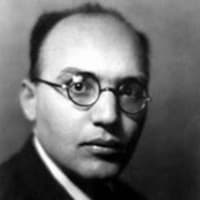
Kurt Weill
20th Century · 1900–1950
Kurt Weill had two careers on two continents. The son of a synagogue cantor in Dessau, Germany, he trained as a classical composer in Berlin and found fame in 1928 with The Threepenny Opera, written with the playwright Bertolt Brecht: a beggars' opera for the Weimar era whose opening number became the standard "Mack the Knife."
When the Nazis took power in 1933, Weill, who was Jewish, fled Germany, and by 1935 he was in New York. There he rebuilt himself as a Broadway composer, working with writers such as Ira Gershwin and Maxwell Anderson, and insisted his American shows be judged on their own terms rather than as a comedown from Berlin.
The Threepenny Opera is the essential starting point. Then try The Seven Deadly Sins, a sung ballet about a woman sent out to earn money for her family, written with Brecht just after both had fled Germany.
64 works in the catalog, across 4 genres. Log what you listen to with Opus, the classical music journal for iPhone.
Chamber
- Cello Sonata
Orchestral
- Concerto, for violin and wind orchestra, op. 12
- Symphony no. 1, "Berliner Symphonie"
- Aufstieg und Fall der Stadt Mahagonny Suite from the opera
- Berlin im Licht, march for military band
- Symphony no. 2
Stage
- Die Dreigroschenoper Opera
- Die sieben Todsünden Ballet
- Aufstieg und Fall der Stadt Mahagonny Opera
- Der Jasager Opera
- Der Kuhhandel Opera
- Der Lindberghflug
- Der Protagonist, op. 15 Opera
- Der Silbersee Opera
- Der Silbersee
- Der Weg der Verheissung Opera
- Der Zar läst sich photographieren Opera
- Down in the Valley Opera
- Happy End Musical
- Happy End Opera
- Huckleberry Finn Musical
- Knickerbocker Holiday Musical
- Konjunktur, incidental music
- Lady in the Dark Musical
- Lost in the Stars Musical
- Love Life
- Marie Galante
- Marie Galante Incidental music
- One Touch of Venus Musical
- Railroads on Parade, pageant, "Fantasia on Rail Transport"
- Royal Palace, op. 17 Opera
- Street Scene Musical
- The Firebrand of Florence
- The River is Blue Film score
- Ulysses Africanus Musical
- Where Do We Go from Here? Film score
- You and Me, film score
Vocal
- Das Berliner Requiem
- 4 Walt Whitman Songs
- 6 Songs
- Baa M'nucha
- Berlin im Licht
- Buddy on the Nightshift
- Complainte de la Seine
- Das Abschiedsbrief
- Das schöne Kind
- Das Stundenbuch Song cycle
- Der neue Orpheus, op. 15 Cantata
- Es Regnet, song for voice and piano
- Happy End: Surabaya Johnny; Die Dreigroschenoper: Die Moritat von Mackie Messer, for voice, piano and string quartet
- Havu l'venim
- Im Volkston, "Das Scheiden, ach das Scheiden"
- Je ne t'aime pas
- Mahagonny Songspiel, for soloists and orchestra
- Nanna's lied, "Meine Herren, mit siebzehn Jahren"
- Propaganda Songs
- Schickelgruber
- The Ballad of Magna Carta, for narrator, bass, chorus, and orchestra
- Und was bekam des Soldaten Weib?
- Vom tod im Wald, ballad for bass and 10 wind instruments, op. 23
- Wie lange noch?
- Youkali, tango habañera
- Zaubernacht, children's pantomime for soprano and chamber orchestra
- Zu Potsdam unter den Eichen, for male chorus
Related composers


Keep a listening journal.
Opus is free on the App Store.