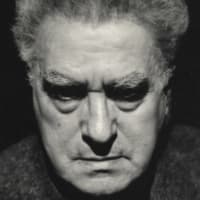
Edgard Varèse
20th Century · 1883–1965
Edgard Varèse left Paris for New York in 1915 and did most of his composing there, insisting that music should be understood as organized sound, with sirens, noise, and percussion admitted on equal terms with melody. Nearly everything he had written in Europe was lost, much of it in a warehouse fire, so his surviving catalog is small and starts in mid-career.
He wrote slowly and his premieres often caused scandals, but younger musicians kept finding him. By the 1950s he was working with tape and electronics, and his Poème électronique played through hundreds of loudspeakers inside a pavilion at the 1958 Brussels World's Fair. Frank Zappa was among his devoted fans.
Start with Ionisation, a short work for percussion alone, played by thirteen musicians with no melody instruments in sight. Then try Amériques, his huge orchestral picture of the New World.
20 works in the catalog, across 3 genres. Log what you listen to with Opus, the classical music journal for iPhone.
Chamber
- Ionisation, for 13 percussion instruments
- Density 21.5, for solo flute
- Déserts for brass, percussion, piano, and tape
- Hyperprisme, for winds and percussion
- Intégrales, for 11 winds and 4 percussionists
- Octandre, for flute, oboe, clarinet, bassoon, horn, trumpet, trombone, and double bass
- Poème électronique, for tape
Orchestral
- Amériques
- Arcana
- Deserts
- Poeme électronique
- Density 21.5, for flute and orchestra
- Hyperprisms
- Offrandes - Chanson De La-Haut
- Offrandes - La Croix Du Sud
- Tuning Up
Vocal
- Ecuatorial, for bass, chorus, brass, piano, organ, 2 ondes martenots, and percussion
- Nocturnal, for soprano, chorus of basses, and chamber orchestra
- Offrandes, for soprano and chamber orchestra
- Un grand sommeil noir, song for voice and orchestra
Related composers


Keep a listening journal.
Opus is free on the App Store.