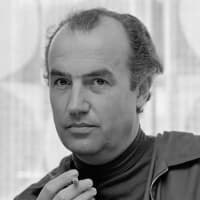
Luigi Nono
Post-War · 1924–1990
Luigi Nono was born in Venice in 1924, trained first as a lawyer, and became one of the leading figures of the European musical avant-garde after World War II. A lifelong communist, he believed new music and radical politics belonged together, and he took his work seriously enough to present it in factories as well as concert halls. In 1955 he married Nuria Schoenberg, daughter of the composer Arnold Schoenberg.
His music can be severe, but its motivation is human. Il canto sospeso, from 1956, sets fragments of farewell letters written by European resistance fighters condemned to death, sung by chorus and soloists with orchestra. In his late years the music turned inward: quiet, spacious pieces, often using live electronics, shaped by the echoing sound world of his native Venice. He died there in 1990.
Start with Il canto sospeso, then, when you want something stranger and more intimate, La lontananza nostalgica utopica futura, for solo violin and tape.
21 works in the catalog, across 3 genres. Log what you listen to with Opus, the classical music journal for iPhone.
Chamber
- Contrappunto dialettico alla mente For two-channel magnetic tape
- La lontananza nostalgica utopica futura, for violin and 8 magnetic tapes
- 'Hay que caminar' soñando, for 2 violins
- A Pierre. Dell' azzuro silenzio, inquietum, for bass flute, clarinet, double bass and live electronics
- Con Luigi Dallapiccola, for 6 percussionists also operating 4 pickups, 3 ring modulators and 3 frequency generators
- Epitaffio per Federico Garcia Lorca no. 2: Y su sangre ya viene cantando, for flute and small orchestra
- Post-Prae-ludium no. 1 'per Donau', for tuba and live electronics
Keyboard
- ...sofferte onde serene... For piano and tape
Vocal
- Il canto sospeso Cantata for vocal soloists, choir, and orchestra
- Como una ola de fuerza y luz, for soprano, piano, orchestra and tape
- Cori di Didone, for chorus and percussion
- Das atmende Klarsein, for small chorus, bass flute, live electronics and tape
- Da un diario italiano, for 2 choirs
- Guai ai gelidi mostri, for 2 altos, flute, clarinet, tuba, viola, cello, bass and live electronics
- Intolleranza 1960, concert suite for soprano, chorus and orchestra
- Liebeslied, for chorus and instruments
- Omaggio a György Kurtág, for contralto, flute, clarinet, tuba and live electronics
- Prometeo, Tragedia dell'ascolto, for vocal soloists, speakers, choruses, orchestras and live electronics
- Quando stanno morendo. Diario polacco no. 2, for 4 female voices, bass flute, cello and live electronics
- Risonanze errante, Liederzyklus a Massimo Cacciari, for mezzo-soprano, flute, tuba, 6 percussionists and live electronics
- Sarà dolce tacere, for 8 vocal soloists
Related composers


Keep a listening journal.
Opus is free on the App Store.