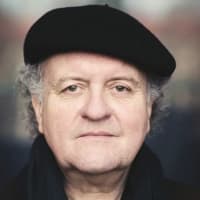
Wolfgang Rihm
Post-War · 1952–2024
Wolfgang Rihm, born in Karlsruhe, Germany, in 1952, arrived in the 1970s as a young composer pushing against the strict, system-driven avant-garde of the postwar years. His teachers included Karlheinz Stockhausen and Klaus Huber, but his instinct ran toward raw, direct expression, music that sounds written in the heat of the moment, and he became a central figure in what critics called a return to expressive immediacy.
He stayed rooted in Karlsruhe, teaching composition for decades at the music academy there, and wrote at an almost unmanageable pace: a catalogue of hundreds of works spanning orchestral music, string quartets, songs, and operas, including the chamber opera Jakob Lenz, about a poet's mental collapse.
His orchestral music is the most direct way in: pick a recent recording of one of his orchestral works and listen for the sudden swings between violence and stillness that mark his voice.
90 works in the catalog, across 5 genres. Log what you listen to with Opus, the classical music journal for iPhone.
Chamber
- Abschieds-Marsch, for 4 trumpets, 3 trombones and percussion
- Antlitz, for violin and piano
- Canzona nuova, for 5 violas
- Dyade
- Fremde Szene I, for piano trio
- Fremde Szene II, for piano trio
- Fremde Szene III, for piano trio
- Fremde Szenen I-III, for piano trio
- Hekton, for violin and piano
- Kein Firmament, for 14 players
- Phantom und Eskapade, for violin and piano
- Piano Trio
- Schrift-Um-Schrift, for 2 pianos and 2 percussionists
- Sine Nomine I, for 5 brass instruments
- String Quartet no. 3, "Im Innersten"
- String Quartet no. 5
- String Quartet no. 8
- String Quartet no. 9, "Quartettsatz"
- Studies for Clarinet Quintet
- Uber die Linie VII, for violin
- Vier Male, for clarinet in A
- Violin Sonata
Keyboard
- Auf einem anderen Blatt, for piano
- Brahmsliebewalzer, for piano
- Klavierstücke
- Klavierstücke
- Klavierstücke
- Klavierstück no. 1, op. 8a
- Klavierstück no. 2, op. 8b
- Klavierstück no. 4
- Klavierstück no. 5, "Tombeau"
- Klavierstück no. 6
- Klavierstück no. 7
- Nachstudie, for piano
- Préludes for piano
- Wortlos, for piano
- Zwei kleine Schwingungen, for piano
- Zwiesprache, for piano
- Über-Schrift, for 2 pianos
Orchestral
- COLL'ARCO, for violin and orchestra
- Dis-Kontur, for large orchestra
- Doppelgesang, for viola, violin and orchestra
- Dritte Musik, for violin and orchestra
- Dunkles Spiel, for small orchestra
- Erscheinung
- Gesungene Zeit, for violin and orchestra
- Jagden und Formen, for orchestra
- Klangbeschreibung I, for 3 orchestra groups
- Klangbeschreibung III, for large orchestra
- Konzert in einem Satz, for cello and orchestra
- La musique creuse le ciel, for 2 pianos and large orchestra
- Lichtes Spiel
- Lichtzwang, for violin and orchestra
- Marsyas, rhapsody for trumpet with percussion and orchestra
- Morphonie, for string quartet and orchestra
- Music for Oboe and Orchestra
- Musik fur Klarinette und Orchester, "Uber die Linie II"
- Styx und Lethe, for cello and orchestra
- Sub-Kontur, for orchestra
- Symphony no. 1, op. 3
- Symphony no. 2
- Ungemaltes Bild, for orchestra
- Vers une Symphonie fleuve III, for orchestra
- Verwandlung, for orchestra
- Verwandlung 2, for orchestra
- Verwandlung 3, for orchestra
- Verwandlung 4, for orchestra
Stage
- Tutuguri, ballet for speaker, chorus, tape and orchestra
Vocal
- 3 Gedichte von Monique Thoné, for middle voice and piano
- 4 spate Gedichte von Friedrich Ruckert, for voice and piano
- 5 Gedichte von J.M.R. Lenz, for voice and piano
- Aestimatus sum, motet for chorus
- Akt und Tag, 2 studies for soprano and string quartet
- Caligaverunt oculi mei, motet for chorus
- Communio
- Das Rot, song cycle for soprano or tenor and piano
- Depart, for chorus, speaking chorus and 22 players
- DEUS PASSUS, oratorio for soloists, chorus and orchestra
- Ende der Handschrift, song cycle for voice and piano
- Frau / Stimme, for soprano and orchestra with second soprano
- Klangbeschreibung II, for 4 women's voices, brass quintet and percussion ensemble
- Nachtwach, for 8 voices, chorus, 4 trombones and woodblock
- Passionsmotetten, for voices
- Quid est Deus, for chorus and orchestra
- Raumauge, for chorus and 5 percussionists
- Recessit pastor noster, motet for chorus
- Rilke: 4 Gedichte, for tenor and piano
- Symphonie 'Nähe fern', for baritone and orchestra
- Umsungen, for baritone and 8 instruments
- Vigilia, for 6 voices and ensemble
Related composers


Keep a listening journal.
Opus is free on the App Store.